Not every vehicle needs the same level of paint correction before ceramic coating, but existing defects should be evaluated because the coating will not remove them. Ceramic coating bonds to whatever condition the paint is already in — it locks that condition in rather than improving it. Swirl marks, light scratches, and oxidation that exist before coating will still be visible afterward, just glossier, which surprises a lot of owners who assumed the coating itself would handle both jobs at once.
That distinction catches a lot of first-time coating customers off guard. Here’s what paint correction actually does, how it relates to ceramic coating, and how to figure out what your own vehicle needs before booking either service.
What Paint Correction Actually Is
Paint correction uses machine polishing — sometimes multi-stage compounding — to reduce the appearance of surface defects: swirl marks, light scratches, oxidation, and general dullness that builds up over years of washing, sun exposure, and everyday driving. It works by removing a thin layer of clear coat to level out the surrounding surface, which is why not every defect responds the same way, and why deeper damage sometimes can’t be fully corrected without risking the clear coat’s remaining thickness across the panel.
Daniel’s Detailing structures paint correction across tiers — a lighter, single-stage option for paint that’s in generally good shape with only minor imperfections, and a more involved multi-stage option for paint showing more visible swirl marks, oxidation, or scratching overall. Which one makes sense depends entirely on the paint’s actual starting condition.
What Ceramic Coating Actually Does
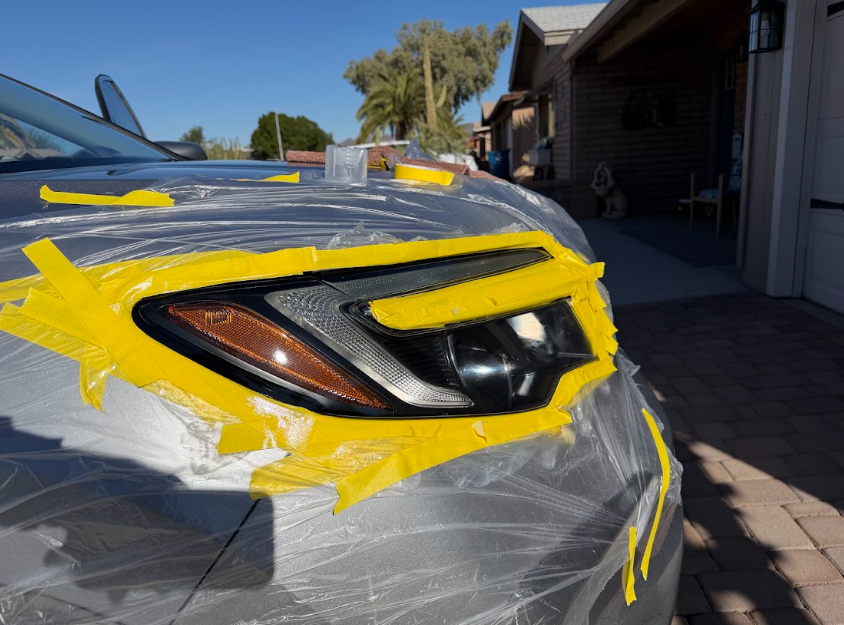
Ceramic coating is a separate process — a liquid polymer that bonds to the clear coat, helping resist environmental contamination, adding hydrophobic behavior, and enhancing gloss. Daniel’s Detailing offers this across multiple duration tiers, from a shorter-duration option up through longer-lasting tiers, depending on how much durability an owner wants. None of these tiers are designed to correct what’s underneath — they’re designed to protect and enhance whatever condition already exists.
Paint correction changes the condition of the paint itself. Ceramic coating protects whatever condition exists at the time of application. They solve genuinely different problems, and treating one as a substitute for the other is where disappointment usually comes from.
Why Existing Defects Remain Visible Beneath a Coating
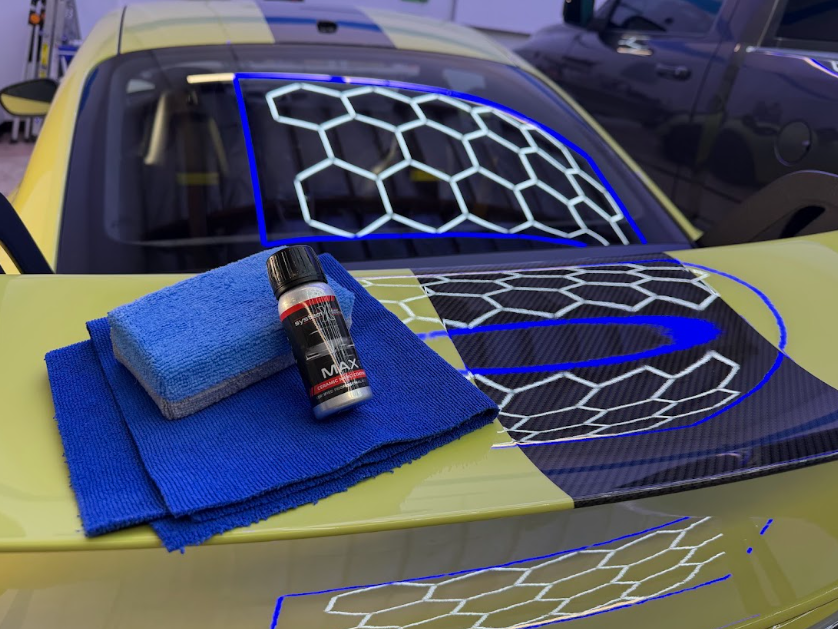
Ceramic coating is a thin, transparent layer without the thickness or mechanical action to fill in or level out surface irregularities. A swirl mark is a physical disruption in the clear coat — light catches it differently than the surrounding paint, which is what makes it visible in the first place. A coating layered on top doesn’t change that physical geometry; it adds gloss and protection over the same surface pattern that was already there.
This is why ceramic coating should never be sold or understood as a form of paint repair. It’s a protective and cosmetic-enhancement product, not a corrective one. If the goal is genuinely eliminating visible swirl marks or light scratches, that work has to happen before coating — applying a coating over uncorrected paint locks those exact defects in for the entire life of the coating.
Does Every Vehicle Need Full Paint Correction?
No. A brand-new vehicle with minimal delivery mileage and no visible swirl marks may need very little correction, if any, before coating — sometimes just a light polish or a thorough decontamination wash is genuinely sufficient. A vehicle that’s been through years of automatic car washes or improper drying technique is far more likely to show real swirl marks, hazing, or oxidation that benefits from more substantial correction before that condition gets locked in permanently. The honest answer is that it depends entirely on the vehicle in front of you, not a standard package applied the same way to every car that comes through the door.
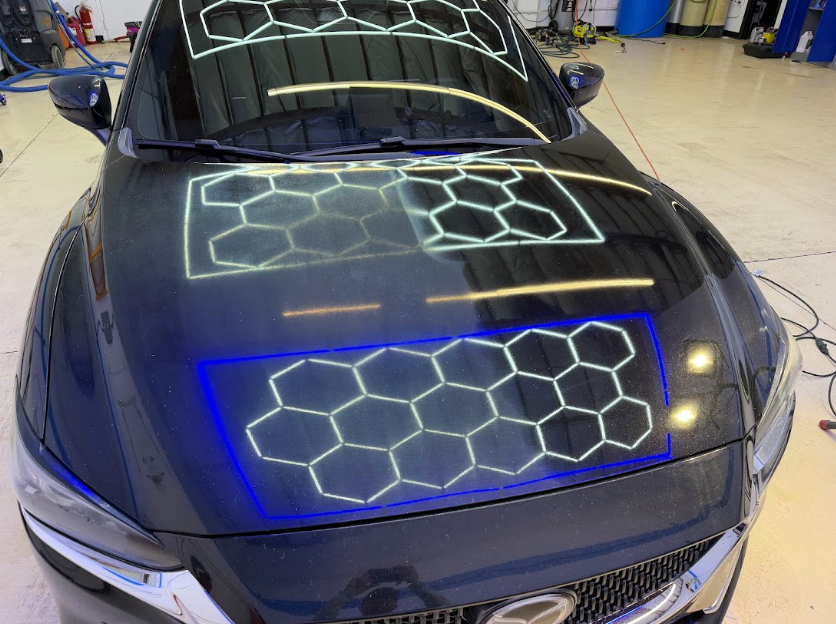
Paint Condition and What Preparation Might Make Sense
| Paint Condition | Possible Preparation Need | Why |
|---|---|---|
| New vehicle with clean paint | Light polish or decontamination only | Minimal existing defects mean little correction is needed before coating |
| Light swirl marks | Single-stage correction | Lighter polishing can meaningfully reduce minor imperfections |
| Moderate defects | Multi-stage correction | More visible swirling or scratching typically needs more than one polishing stage |
| Oxidized paint | Multi-stage correction, condition-dependent | Oxidation often responds to correction, but results vary by how advanced it is |
| Deep scratches | Evaluation required; full correction may not fully resolve them | Scratches through the clear coat into the color layer usually can’t be fully corrected without a repaint of the affected panel |
These are general starting points, not guarantees — actual results depend on the specific vehicle and how the paint has been maintained over time.
Paint Correction vs. Detailing
It’s worth distinguishing correction from routine auto detailing. Detailing focuses on cleaning, protecting, and maintaining appearance — washing, decontamination, interior care — without the machine-polishing work that actually changes the paint’s surface condition. A vehicle can be beautifully detailed and still show swirl marks that only correction would address. It’s a common misunderstanding to assume a standard detail automatically includes correction-level polishing; the two are complementary services, not overlapping ones. We cover this distinction in more depth in the difference between detailing and a basic wash.
Getting Ceramic Coating After Correction
Once correction has addressed whatever defects are actually present, ceramic coating goes on over a surface that’s genuinely ready for it — protecting a result you’re happy with, rather than sealing in problems that were already there. This sequencing affects final appearance more than the coating tier chosen afterward does; a longer-duration coating applied over uncorrected paint will still show every swirl mark underneath it clearly, just with more shine on top.
For a broader look at ceramic coating beyond this specific preparation question, see our guide to professional ceramic coating.
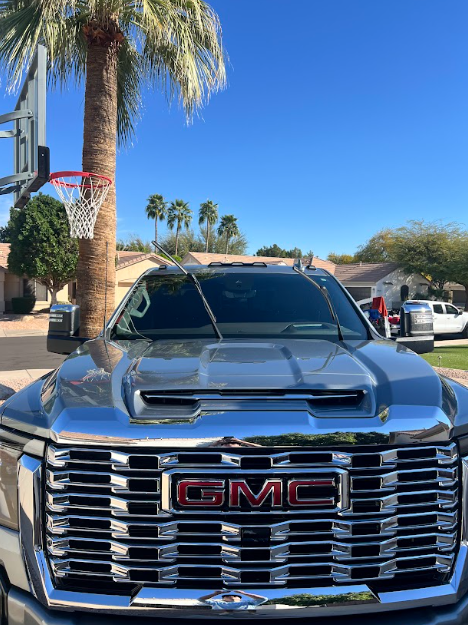
Ongoing Detailing After Ceramic Coating
Once a vehicle has been corrected and coated, the conversation shifts from “how do I fix this” to “how do I keep it this way going forward.” That mostly means proper washing habits going forward — the same improper technique that created swirl marks originally (harsh automatic washes, dirty wash media, improper drying) can still introduce new light marring on a coated surface, even though the coating makes cleanup generally easier. Maintaining a ceramic coating properly is an ongoing habit, not a one-time fix, and it’s worth understanding before assuming the coating alone handles everything from here.
If you’re also weighing whether ceramic coating makes sense given Arizona’s climate specifically, that’s a genuinely separate question from paint preparation entirely — we cover whether ceramic coating makes sense in Arizona in a dedicated guide. Tesla owners have their own version of this preparation question too, covered in our Tesla-specific detailing and coating guide.
Frequently Asked Questions
Do you need paint correction before ceramic coating?
It depends on the paint’s existing condition. A new or well-maintained vehicle with minimal visible defects may need little to no correction, while a vehicle with visible swirl marks or oxidation typically benefits from correction first, since the coating won’t remove those defects on its own.
Can ceramic coating hide swirl marks?
Not meaningfully. Ceramic coating is a thin, transparent layer that adds gloss and protection, but it doesn’t have the thickness or mechanical action to level out the surface irregularities that make swirl marks visible. Existing swirl marks generally remain just as visible after coating, only glossier.
Does ceramic coating remove scratches?
No. Ceramic coating protects the surface it’s applied to — it doesn’t correct or repair what’s underneath. Reducing the appearance of scratches is the job of paint correction, done separately and before the coating is applied.
Does a new car need polishing before ceramic coating?
Not necessarily. Many new vehicles have minimal paint defects and may only need a light polish or thorough decontamination rather than full correction. The right approach depends on the actual condition of the paint at delivery.
Can you coat a car without paint correction?
Yes, but only if the paint doesn’t have defects worth correcting. If there’s visible swirl marks, scratches, or oxidation, skipping correction means coating over those imperfections rather than resolving them — a decision that should be made deliberately.
Is paint correction the same as detailing?
No. Detailing focuses on cleaning, protecting, and maintaining a vehicle’s appearance without changing the paint’s surface condition. Paint correction uses machine polishing to actually reduce the appearance of defects like swirl marks and oxidation.
What happens if you coat paint with existing defects?
The coating cures over whatever condition the paint was in at application, sealing those defects in for the life of the coating. The surface will typically look glossier overall, but existing swirl marks, scratches, or oxidation will still be visible underneath the added shine.